

Agricultural Development
Strong food systems build strong communities.
Investing in local agriculture is a sustainable way of eliminating hunger.
Investing in local agricultural inputs in developing countries strengthens food systems, and reduces hunger and malnutrition.
MFK’s agronomists educate Haitian farmers to improve the quality and yield of their peanut crops, empowering them to better feed their communities. Knowledge about soil conservation, crop rotation, aflatoxin control, and more lead to greater success for these farmers.
By supporting farmers in-country, they benefit financially with more crops to sell in markets, and families benefit with greater access to nutritious food.
MFK has trained more than 4,800 Haitian farmers.
What are food systems?
“Food systems” refers to the connection of activities that bring food “from farm to table.”
Production: Growing and harvesting food such as crops, meat, and eggs; MFK trains farmers the best methods to grow more peanuts of better quality.
Processing: Preparation activities such as washing/drying crops or packaging food items; MFK teaches farmers how to safely dry, store, and package peanuts.
Distribution: Food is sold, traded, or given to users; MFK helps farmers grow their business, and purchases peanuts from farmers trained in the program.
Consumption: Food is cooked, processed, and eaten by individuals and families; MFK uses peanuts to make Plumpy’Nut and supplemental foods to treat and prevent malnutrition.
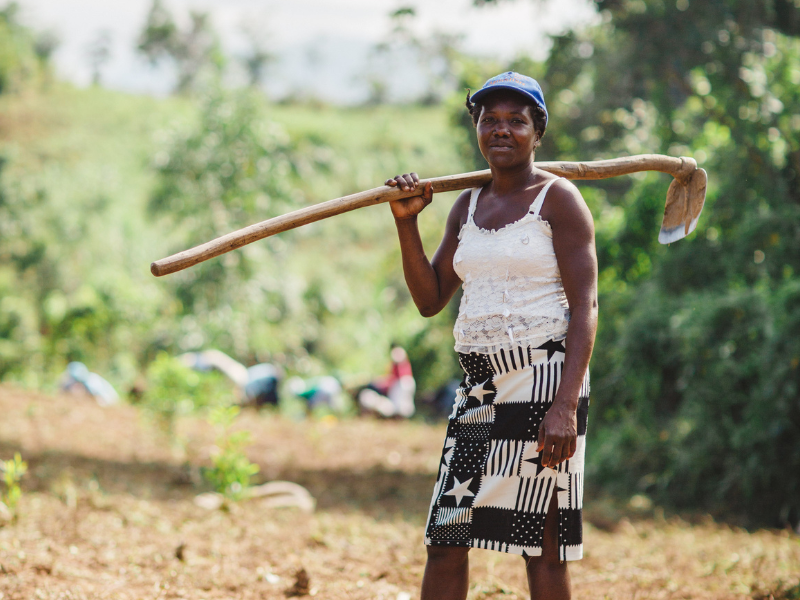
Haitian farmer in a peanut field

Haitian farmer holding harvested peanuts